How I Keep My Stamp Investments Safe – An Expert’s Real Risk Control Playbook
You wouldn’t stash rare stamps under your mattress, right? Yet so many collectors ignore the financial risks hiding in plain sight. I’ve been there—excited by a find, only to realize later it was overpriced, damaged, or worse, a fake. Over years of investing in philately, I’ve learned that passion isn’t enough. What protects your money is smart risk control. Let me walk you through the real moves I use to preserve value, avoid costly mistakes, and keep this hobby financially rewarding. This isn’t about chasing trends or gambling on obscure issues; it’s about building a disciplined, informed, and resilient approach to stamp investing. Because when you treat your collection as more than just a pastime, every decision carries financial weight—and every safeguard matters.
Why Stamp Collecting Isn’t Just a Hobby—It’s an Asset Game
At first glance, stamp collecting appears to be a quiet, sentimental pursuit—something you might inherit from a grandparent or pick up at a flea market. But beneath that nostalgic surface lies a structured financial reality. Stamps are tangible assets, much like fine art, rare coins, or vintage wine. They have scarcity, historical significance, and market demand—all of which contribute to their monetary value. Unlike digital investments such as cryptocurrencies, stamps exist in physical form, immune to server crashes, hacking, or algorithmic volatility. This stability gives them an enduring appeal, especially during uncertain economic times when paper assets fluctuate wildly.
However, physical presence does not equate to safety. The misconception that “rare equals valuable” leads many collectors into financial pitfalls. A stamp may be rare, but if there’s no active market for it, its liquidity is low, meaning it can’t be easily sold at fair market value. I once came across a beautifully preserved set of early 20th-century Scandinavian issues—extremely rare, with only a few known copies. Excited, I considered purchasing. But after researching recent auction records, I found no sales in over a decade. No demand, no matter how rare the item. That’s when I realized: rarity without market interest is just inventory, not investment.
Another overlooked factor is authenticity. Unlike stocks, which are digitally tracked and verified, stamps rely heavily on documentation, expert grading, and provenance. A single forgery can undermine an entire collection’s credibility. The market for philatelic fakes has grown more sophisticated, with counterfeiters using period-accurate paper, inks, and perforations. Without proper verification, even experienced collectors can fall victim. I’ve seen cases where a supposedly valuable inverted stamp—a printing error that increases value—was later exposed as a carefully crafted replica. The emotional attachment made the owner reluctant to have it appraised, delaying the discovery and compounding the loss.
Liquidity is another critical component often ignored. Stocks can be sold in seconds; real estate may take months. Stamps fall somewhere in between, but their sale timeline depends heavily on the specific issue, condition, and buyer pool. High-demand items like the 1918 U.S. Inverted Jenny or classic British Penny Blacks move quickly at auction. But lesser-known issues, even in pristine condition, may linger for years. This lack of liquidity means collectors must plan for long holding periods and avoid treating stamp portfolios like cash equivalents. Understanding these financial dimensions transforms stamp collecting from a passive hobby into an active asset management strategy—one that requires research, discipline, and risk awareness.
The Hidden Dangers Most Collectors Overlook
Most collectors focus on acquisition—finding the next gem, completing a series, or filling a gap in their album. But far fewer consider what happens after the purchase. The real danger isn’t in buying stamps; it’s in failing to protect them from slow, invisible deterioration. One of the most common yet preventable risks is environmental damage. Exposure to sunlight, humidity, and temperature fluctuations can degrade paper, fade colors, and weaken gum on unused stamps. I once inherited a collection stored in a wooden cabinet near a sunlit window. Over time, UV rays had bleached the reds and blues from many stamps, reducing their grade from “excellent” to “good.” That single factor slashed their market value by nearly 40%. What seemed like a safe storage solution was actually a slow-motion devaluation.
Improper handling is another silent threat. Oils from fingers, moisture from breathing, and even static electricity can harm delicate paper fibers. I’ve watched collectors flip through albums with bare hands, unaware that each touch leaves microscopic residues that attract dust and accelerate aging. The solution? Cotton gloves, plastic sleeves, and minimal direct contact. These small habits make a significant difference over time. But beyond physical care, there’s the risk of forgery—an issue that has grown more complex with advances in printing technology. Modern scanners and printers allow counterfeiters to replicate even the finest details of rare stamps. Some forgeries are so precise they fool grading services, especially when paired with falsified certificates of authenticity.
Then there’s the emotional bias that distorts financial judgment. Many collectors become attached to certain themes—space exploration, royal portraits, or wartime issues—and overpay simply because they love the story behind the stamp. I once met a woman who spent thousands on a set of 1960s NASA-themed stamps, believing they would appreciate due to renewed public interest in space travel. While the theme was popular, the specific stamps were mass-produced and widely available. Her emotional connection blinded her to the lack of scarcity, a key driver of value. Sentiment has no place in investment decisions. When passion overrides analysis, overpayment follows.
Regional market shifts also play a role. Stamp values often reflect collector demographics. For example, British colonial stamps once commanded high prices in former Commonwealth nations, but as older generations pass and younger collectors show less interest, demand has softened. Similarly, Chinese collectors have recently driven up prices for certain Asian issues, creating short-term bubbles that may not last. These shifts are hard to predict but crucial to monitor. Ignoring them means holding assets that may lose relevance—and value—over time. The most dangerous risk isn’t what you see; it’s what you don’t see until it’s too late.
Proven Filters I Use to Avoid Bad Buys
Before I commit to any stamp purchase, I apply a strict set of filters—mental checkpoints that separate impulse from investment. The first question I ask is: What is the provenance? Provenance refers to the ownership history of a stamp. A well-documented chain of custody, especially if it includes reputable collectors or auction records, adds credibility and reduces the risk of forgery. Stamps with unclear origins—those bought at garage sales, inherited without records, or sourced from unknown dealers—carry higher uncertainty. I once passed on a supposedly rare 19th-century French issue because the seller couldn’t provide any documentation. Later, it surfaced in a forgery ring investigation. My hesitation saved me from a costly mistake.
The second filter is grading. I only consider stamps certified by recognized authorities such as the Philatelic Foundation or Professional Stamp Experts (PSE). These organizations use expert examiners to verify authenticity, assess condition, and assign a grade on a standardized scale. A grade of “Superb” or “Gem Mint” signals exceptional preservation, while lower grades reflect flaws like toning, thins, or creases. But grading reports aren’t infallible. I’ve seen cases where a stamp was graded years ago and later downgraded upon re-examination. That’s why I check the date of certification and, for high-value items, request a second opinion. Grading isn’t a one-time seal of approval; it’s an ongoing process.
Market liquidity is my third filter. I evaluate whether the stamp has a consistent trading history. Are there recent auction results? Is there an active buyer community? I use resources like Stanley Gibbons catalogs, auction archives, and online collector forums to gauge demand. A stamp with no recent sales data is a red flag. It may be rare, but rarity without liquidity means you can’t convert it to cash when needed. I focus on issues with established markets—those regularly featured in major auctions or listed in authoritative price guides. This ensures I can sell when the time is right, without accepting a fire-sale price.
Finally, I assess the seller’s reputation. I avoid anonymous online listings and prefer dealers with long-standing memberships in philatelic societies. I check reviews, verify business licenses, and look for transparency in descriptions. A trustworthy seller provides high-resolution images, full condition disclosures, and return policies. These filters—provenance, grading, liquidity, and seller credibility—form a protective barrier against bad buys. They don’t eliminate risk entirely, but they reduce it to a manageable level. Over the years, this system has helped me avoid overpriced items, spot undervalued opportunities, and maintain confidence in every acquisition.
Diversification Beyond Albums: Spreading Risk Smartly
Just as financial advisors recommend spreading investments across asset classes, I apply the same principle to my stamp collection. Concentrating all holdings in one era, country, or theme is risky—if that niche loses popularity, the entire portfolio suffers. I’ve seen collectors dedicate years to building a complete set of Victorian-era British stamps, only to find that interest has waned and resale values have stagnated. Diversification isn’t about diluting passion; it’s about ensuring stability. My collection spans multiple categories: classic issues, thematic sets, and modern first-day covers. Each segment responds differently to market forces, providing a natural hedge against volatility.
For example, during periods of economic uncertainty, classic stamps—particularly those from the 19th and early 20th centuries—tend to hold or increase in value. Their historical significance and limited supply make them safe-haven assets within the philatelic world. Meanwhile, thematic collections—such as stamps depicting birds, space travel, or famous artists—can experience surges based on cultural trends. When a major museum hosts an exhibition on Van Gogh, stamps featuring his paintings may see increased demand. By holding both types, I balance long-term stability with short-term opportunity.
Geographic diversification is equally important. While British and U.S. stamps dominate the global market, I also include issues from Europe, Asia, and Latin America. This spreads exposure across different collector bases. When demand slows in one region, another may be gaining momentum. For instance, Indian independence-era stamps have gained attention among South Asian collectors abroad, driving up prices independently of Western market trends. This global perspective helps insulate my portfolio from regional downturns.
I also vary by condition and investment horizon. Some stamps I buy for long-term appreciation—rare mint issues with full original gum and no flaws. Others I acquire at lower grades for restoration potential or thematic completeness. This tiered approach allows me to allocate capital strategically, balancing high-risk, high-reward items with safer, steady performers. Diversification doesn’t mean collecting randomly; it means building a portfolio with intention. Each addition serves a purpose, whether it’s hedging against inflation, capturing thematic trends, or preserving historical value. When done right, it turns a personal collection into a resilient financial asset.
The Role of Insurance and Secure Storage—No, Your Drawer Isn’t Enough
Early in my collecting journey, I stored my stamps in a wooden desk drawer lined with felt. It felt secure enough—until a plumbing leak soaked the floor and warped the albums. Two rare 1930s sets were damaged beyond repair. That incident was a wake-up call: physical protection is financial protection. Since then, I’ve upgraded to climate-controlled storage with stable temperature and humidity levels. Fluctuations in either can cause paper to expand and contract, leading to curling, foxing (brown spots from mold), or adhesive failure. Ideal conditions are 65–70°F with 40–50% relative humidity—similar to museum standards for preserving delicate artifacts.
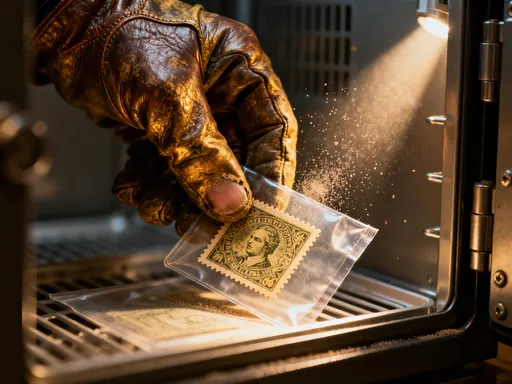
I now house my stamps in acid-free albums and use Mylar sleeves to prevent contact with harmful materials. These sleeves are inert, meaning they won’t react with the paper or ink over time. I also avoid adhesives like stamp hinges, which can leave residue or cause thins when removed. Instead, I use clear, non-tamper-evident mounts that allow full viewing without direct handling. These small upgrades significantly extend the lifespan and value of each stamp.
But even the best storage can’t protect against theft, fire, or natural disasters. That’s why comprehensive insurance is essential. Standard homeowner’s policies typically offer limited coverage for collectibles—often capping at $1,000–$2,000 with high deductibles. More importantly, they may not cover depreciation or replacement cost accurately. I switched to a specialized collectibles insurance policy that covers full appraised value, with no deductible for covered perils. These policies require detailed inventories, including photos, descriptions, and valuation reports. I update mine annually and store digital copies off-site for safety.
Documentation is just as important as the policy itself. I maintain a spreadsheet with every stamp’s details: country, issue date, catalog number, condition grade, purchase price, and current estimated value. For high-value items, I include scans of certificates and auction records. This not only supports insurance claims but also streamlines future sales. Without proper records, proving ownership and value becomes nearly impossible. Secure storage and insurance aren’t luxuries—they’re fundamental components of financial risk control. They ensure that my collection remains protected, both physically and monetarily.
When to Hold, When to Sell—Timing Without Emotion
One of the hardest lessons in stamp investing is learning to let go. It’s easy to hold onto a stamp because of the story behind it, the effort it took to find, or the memories associated with its purchase. But sentiment has no place in investment decisions. I’ve had to sell stamps I loved—not because they were failing, but because market signals indicated it was the right time. The key is developing a disciplined exit strategy based on data, not emotion.
I track several indicators to determine when to sell. Auction results are my primary source. If a similar stamp sells well above estimate, it may signal peak demand. Conversely, repeated unsold lots suggest weakening interest. I also monitor collector demographics. As older generations retire from collecting, certain niches lose momentum. If a once-popular theme isn’t attracting younger buyers, I consider reallocating those assets. Market plateaus are another trigger. If a stamp’s value has remained flat for two or more years despite stable conditions, I reassess whether it’s still a strong performer.
I also set quiet profit targets. For example, if a stamp appreciates by 50% over five years, I consider selling half and reinvesting the proceeds. This locks in gains while maintaining exposure in case of further growth. It’s a balanced approach that reduces risk without abandoning potential. I avoid trying to time the absolute peak—no one can predict that perfectly. Instead, I aim for a strong, sustainable exit point.
Selling doesn’t mean giving up on collecting; it means making room for better opportunities. The capital I free up often goes into undervalued areas or emerging trends. This constant rebalancing keeps my portfolio dynamic and financially healthy. Letting go of a beloved stamp isn’t a loss—it’s a strategic move. And over time, this discipline has helped me avoid major downturns and compound my returns steadily.
Building a Long-Term Strategy That Works
Real stamp investing isn’t about quick profits or chasing viral trends. It’s about building sustainable value over time through patience, research, and consistent risk management. I treat my collection like a financial portfolio, reviewing it annually to assess performance, adjust allocations, and identify areas for improvement. This isn’t a hobby I check in on occasionally—it’s a long-term commitment that requires active oversight.
Each year, I conduct a full inventory audit. I verify condition, update valuations, and cross-check against market trends. If certain stamps have underperformed, I investigate why—was it poor selection, market shift, or external damage? This analysis informs my buying decisions for the coming year. I also reinvest a portion of my profits into higher-potential areas, whether that’s rare classic issues or emerging thematic markets. Reinvestment isn’t automatic; it’s strategic, guided by data and long-term goals.
I stay informed by reading philatelic journals, attending auctions, and participating in collector networks. Knowledge is one of the most powerful risk control tools. The more I understand about market dynamics, grading standards, and historical context, the better equipped I am to make sound decisions. I also consult with trusted experts when considering high-value purchases, ensuring I’m not acting on incomplete information.
Most importantly, I maintain emotional distance. I collect because I love stamps, but I invest because I respect their financial potential. Separating passion from prudence has been the foundation of my success. This method isn’t flashy or fast, but it’s reliable. It allows me to enjoy the beauty and history of stamps while protecting my financial well-being. Over the years, this disciplined approach has turned a personal interest into a resilient, growing asset—one that I can pass on with confidence, knowing it’s built on wisdom, not wishful thinking.